

Dill
Dill
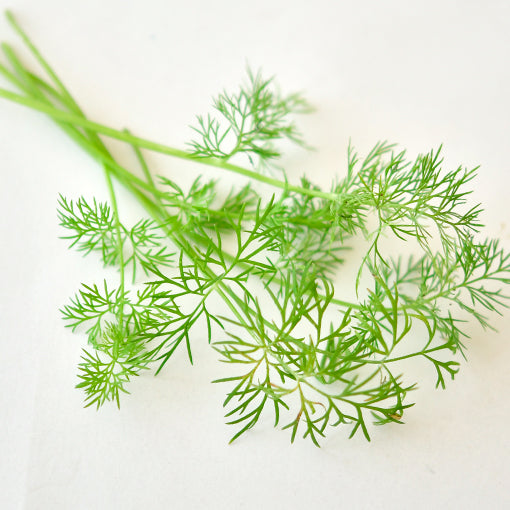
Dill's stems, leaves, flowers, and fruits are all usable and widely used in ornamental, culinary, craft, and bath products. It's a beloved herb in Europe, especially prized for its pairing with meat dishes, and particularly delicious with fish like smoked salmon and herring, earning it the nickname "herb of fish."
|
Ideal ambient temperature: around 20°C. |
Although they need water, if the soil is too waterlogged (soaked), the seeds will rot due to lack of oxygen. |
|
Avoid soil drying The soil must be kept moist. If it is too dry, the seeds will not be able to absorb water and will fail to germinate. |
Until it sprouts, place it in a shady place for half a day. Avoid direct sunlight; place in a semi-shaded area (with diffused light). |


|
1. Spread the seeds evenly on the soil surface, avoiding overlapping. 2. Then gently cover with soil. |
potting soil |
|
Please scatter the seeds so that they do not overlap on the soil , and then gently press the seeds and soil together with your fingers to make them adhere. Note: Since these are pre-made soil blocks, there is usually no need to cover them with additional soil. Instead, gently press them down to ensure close contact between the seeds and the soil blocks. |
potting soil |


|
Newly sprouted |
Growing |
Harvest season |


Post-germination management
Watering method :
After germination and in the early stages of transplanting, water gently with a thin stream of water (such as a spray bottle) to avoid washing away the seedlings with a strong flow. Water thoroughly when the soil surface is dry.
Possible reasons why seeds fail to germinate
- Inappropriate temperature <br />The ideal germination temperature for seeds is approximately 20°C . Please confirm that the sowing environment has reached a suitable temperature.
- The soil is too dry . If the soil is not moist enough, the seeds that were originally moist will dry out, which will lead to a decrease in germination rate.
- Too much moisture in the soil will prevent the seeds from breathing and may even cause them to rot, thus affecting germination.
- Individual differences in seeds <br />The germination rate of each seed may vary; some seeds are inherently difficult to germinate.
If you want it to grow larger, carefully remove it from the pot, being careful not to disturb the soil around the roots, and then replant it in a larger pot or in the garden. Apply diluted liquid fertilizer every 2-3 weeks.
*Please handle seeds and soil carefully to prevent children or pets from accidentally ingesting them.
*Do not use the seeds as food or feed.
*Growth and final results will vary depending on the growing environment, including weather conditions, region, and altitude.
*Growth cycle is for reference only. We recommend sowing at appropriate temperatures and cultivating according to regional and specific conditions.
*Avoid sowing in the height of summer or the depths of winter, and choose a sowing time that is easy to manage. (If the optimal germination and cultivation temperature is not reached, germination may fail or growth may be poor.)
Before you begin cultivation, store the seeds in a cool, shaded place, away from direct sunlight, high temperatures and humidity.
Causes of plant wilting

Reason 1: Overwatering (root rot)
Reason 1: Overwatering (root rot)
Another reason is over-care and excessive daily watering.
If the soil is too wet, the roots cannot breathe and will rot and die. The roots will shrink and disappear, turn brown, and become thin and fragile.

Reason 2: Dryness
If you forget to water your plants, the soil will dry out and the plants will wither.
The leaves will become dry and brittle.
If there is still moisture in the leaves, water them thoroughly.
They might be able to recover.

Reason 3: Lack of sunlight (Extended)
If the seedlings do not receive enough sunlight after germination, the stems will grow too quickly and eventually break under the weight of the flower heads, causing the plant to wither. Make sure the plant receives ample sunlight and avoid overwatering.

Reason 4: The temperature is not suitable
Every plant has its optimal growth temperature.
Both excessively high and low temperatures can slow down plant growth and even cause plants to wither.
Precautions for planting accessories
-

-

potting soil
Planting methodsThe type of soil used varies depending on the product; please determine this based on the soil you have.


