

Heart-shaped Tomato
Heart-shaped Tomato


 |
The type of soil used varies depending on the product; please determine this based on the soil you have. Before placing the seeds, ensure the soil is moist. You can do this by using the following methods: |
 |
1 | Place the soil in a container and add waterPlace the potting soil into a flowerpot or container, slowly pour in water, and use chopsticks to thoroughly stir the soil to moisten it. |
 |
2 | Put the soil into a bag and add waterFill the bag with potting soil, then slowly pour in water until the soil is moist. |
Planting tips:
It is recommended to sow 1/3 of the seed quantity first (e.g., sow 3 out of 9 seeds) to maintain proper spacing. After the seedlings emerge, thin them out as needed, removing weak seedlings and keeping the strongest plants to provide more growing space.


Basic Planting Guidelines for Heart-shaped Tomato
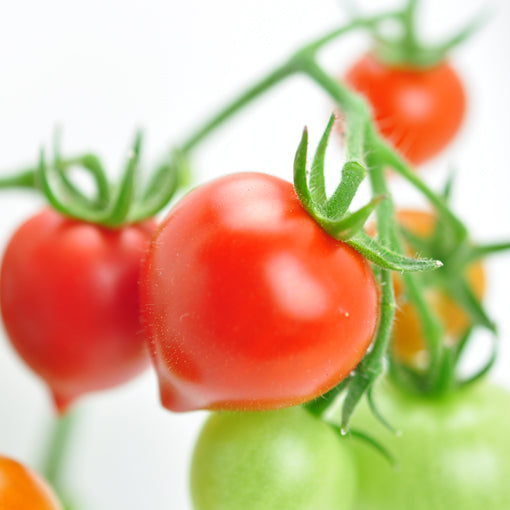
Heart-shaped tomatoes are a variety of mini tomatoes that produce plump, adorable heart-shaped fruits. The fruits are about 2-3 centimeters in diameter. The heart shape becomes more pronounced when cut in half.
|
Ideal ambient temperature: around 25~30°C. |
Cannot be planted directly The seeds are dried and stored after being processed with polymer gel, so they cannot be sown directly. |
|
Before germination, in water First, soak them in water: Prepare a cup with tap water and put all the dried heart-shaped tomato seeds into the water. |
It transforms into a jelly-like sphere approximately 8 millimeters in size. Leave for about 6 hours, until the seeds are wrinkle-free and turn into jelly-like spheres about 8 mm in diameter; at this point, they are ready. If it doesn't expand enough, soak it in fresh water again . |


sowing
|
Moisten the potting soil, then sow the seeds. |
 |
Leave space between the seeds, dig a small groove, partially bury the seeds, and then gently cover them with a small amount of soil. Note: Depending on the sowing time and location, germination may take several days. |
 |
Before germination, keep the soil surface moist, avoid direct sunlight, and manage it in a bright location suitable for cultivation. |
 |
To prevent the soil from drying out, lightly cover it with plastic wrap or similar material to help it germinate. Remove the plastic wrap immediately after germination. |
Post-germination management
Watering (continued from the previous illustration)
Watering should be done gently after germination and during the early growth stage to avoid wetting the leaves. Water thoroughly only after the soil surface has completely dried.
 |
Thinning (shortening seedlings)When about 3 true leaves have grown, leave Remove 1-2 healthy seedlings and thin out the rest. |
 |
Erect pillars As the seedlings grow, erect supports to stabilize the plants. Due to the large size of the fruit, it is recommended to use commercially available supports to secure the entire seedling. And fertilize when it begins to flower. |
 |
pollinationPollination is carried out after flowering. When the flowers begin to bloom, use a brush or cotton swab to gently rub the inside of the flower to artificially pollinate it. |
 |
HarvestingThe fruit is ready to be harvested when it turns red. It takes about one month for green fruit to turn red. |
Precautions:
Please be careful to prevent children or pets from accidentally ingesting the seeds or soil.
Do not use the seeds for food or animal feed purposes.
Growth conditions and cultivation results will vary depending on the cultivation environment, such as climate, region, and altitude.
The planting time is for reference only. It is recommended to sow at a suitable temperature and cultivate according to the region and conditions.
Avoid sowing during the height of summer and the depths of winter; choose a time when management is easier. (If the suitable temperature for germination and cultivation is not reached, germination may fail or growth may be poor.)
Before you begin cultivation, store the seeds in a cool, shaded place, away from direct sunlight, high temperatures and humidity.
Plants need sunlight to grow. Please cultivate them in a sunny location (such as a balcony or near a window).


After germination and in the early stages of planting, water gently with a thin stream of water (such as a spray bottle) to avoid washing away the seedlings with a strong flow. Water thoroughly when the soil surface is dry.

Why didn't the seed sprout? Let us help you find out the reason.

Reason 1: Overwatering (root rot)
Reason 1: Overwatering (root rot)
Another reason is over-care and excessive daily watering.
If the soil is too wet, the roots cannot breathe and will rot and die. The roots will shrink and disappear, turn brown, and become thin and fragile.

Reason 2: Dryness
If you forget to water your plants, the soil will dry out and the plants will wither.
The leaves will become dry and brittle.
If there is still moisture in the leaves, water them thoroughly.
They might be able to recover.

Reason 3: Lack of sunlight (Extended)
If the seedlings do not receive enough sunlight after germination, the stems will grow too quickly and eventually break under the weight of the flower heads, causing the plant to wither. Make sure the plant receives ample sunlight and avoid overwatering.

Reason 4: The temperature is not suitable
Every plant has its optimal growth temperature.
Both excessively high and low temperatures can slow down plant growth and even cause plants to wither.


Germination Guarantee
Did your seeds fail to germinate? Don't worry! Please contact us anytime, and we will send you replacement seeds free of charge. Your gardening experience is our top priority.